



How your body uses it as clean fuel…
I honestly used to think lactate was the villain of the story of my fitness journey. That burning in my quads during a hard session? Lactate, obviously! The metallic taste in my mouth near the end of a race? Yup…lactate. The reason my legs turned from pistons into warm winter porridge halfway up a hill? Definitely, 100% lactate. At least, that’s what every overheard gym conversation and badly-drawn diagram on a whiteboard had told me.
But like most myths in endurance sport, the truth is far more interesting, and far more useful once you peel it open. Lactate isn’t the bad guy, in fact it’s not even close. It’s actually one of the cleanest, fastest fuels your body has, and if you learn how to work with it instead of fighting it, you unlock a whole new level of sustainable speed.
The first thing I had to unlearn was the phrase lactic acid. It sounds scary like something corrosive, bubbling away in your muscles, shutting you down. But here’s the twist: your body doesn’t actually produce lactic acid during exercise. What it produces is lactate, along with a hydrogen ion. The lactate itself isn’t causing the burn; it’s trying to buffer the acidity so you can keep going. Imagine firemen running into a burning building and everyone blaming the guys with the hoses for the smoke. That’s how we’ve treated lactate for decades.
Once I wrapped my head around that point, I guess that’s when things clicked. Lactate shows up when the body is working hard, like hard enough that the aerobic system can’t keep up on its own. So instead of shutting down, your body shifts to a faster pathway that spits out lactate as a byproduct. But, dear reader, who has undoubtedly subscribed to our blogs by now and have absolutely followed us on our social media channels… here’s the magic: your muscles, heart, and even your brain can use lactate as fuel. It’s shuttle-able, recyclable energy. The harder you work, the more your body produces, and the more it can reuse. That’s not a sign of failure at all, it’s a sign of performance.
So why do we still “feel the burn”? That’s the hydrogen ions, the acidity, and not the lactate itself. When those build faster than your body can clear them, your pH drops and suddenly your legs feel like they’ve been filled with warm cement (not the porridge anymore, this stuff stops you). Holding pace becomes a battle of willpower versus biochemistry, and biochemistry usually wins, as you have no doubt experienced.
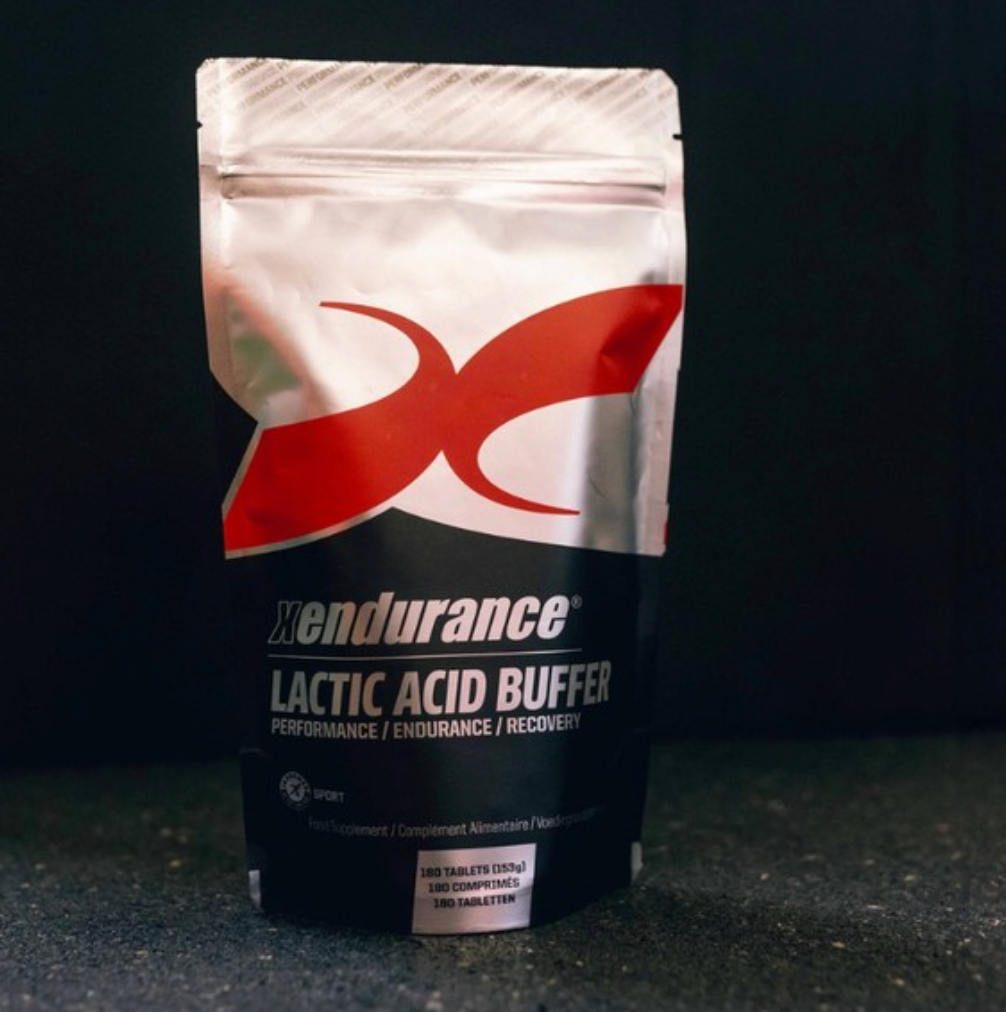
That’s where smart buffering comes in. I started using Xendurance Lactic Acid Buffer not because I wanted to cheat the system, but because I wanted to work with it. The way it supports the body’s natural pH-handling capacity means you can tolerate harder efforts for longer before that familiar burn takes over. It doesn’t mask fatigue though; it just keeps the internal environment stable enough that you can put out repeat efforts instead of falling apart halfway through the second round.
The first session where I noticed the difference was a series of descending 1k reps, the kind where pace expectations climb while your rational brain quietly exits out the side door like the Homer Simpson meme. Normally by the third rep I’m bargaining with myself, promising early finish-line coffees and rest-day lie-ins. But that day, I held my form longer. My breathing stayed smooth, and the burn arrived later than expected, but more importantly, it arrived softer, as if someone had turned down its volume knob from 11 to 5. That's when I understood how valuable buffering can be for anyone trying to hold pace under fatigue.
And then there’s the other half of the lactate story: using lactate as fuel on purpose. When I first learned that Fuel-5 contains lactate as one of its carbohydrate sources, it felt like the universe was winking at me. Here we’ve spent years trying to “avoid lactate,” only to discover it’s one of the most efficient substrates we can give our muscles. Fuel-5 blends lactate with fast and slow-release carbs, which means you’re not just topping up glycogen, you’re feeding the system with a form of energy your body can tap immediately when the intensity spikes. It’s like fuelling the fire with something that burns clean, hot, and fast.
I started using Fuel-5 before sessions that had a lot of surges like hill repeats, Hyrox-style efforts, or long rides with brutal climbs. Basically, anything that forces your body to toggle between moderate and hard effort benefits from a mix of carbs that don’t all hit at once. And on days when my stomach wasn’t exactly thrilled with high sugar loads (we’ve all had those days, especially with kids around), Fuel-5 felt smoother.
If there’s one thing I’ve learned from training, racing, and watching smarter athletes than me, it’s this: performance is about how well you manage the messy chemistry that happens when you push that engine to its limit. Lactate has been miscast for too long, like the medieval witch. It’s not the stuff that slows you down; it’s the stuff that helps you keep going. And when you support your body with the right tools like hydration, fuelling, pacing, and yes, buffering, you don’t just go harder, you go smarter.
I think about lactate now the same way I think about training partners who push me harder than I’d choose to do on my own. They’re uncomfortable, necessary, and ultimately make me better. Now that the science is clearer, it feels good to give lactate the gratitude it deserves. And it feels even better to use tools like Lactic Acid Buffer and Fuel-5 from us here at XEndurance UK to train with that system instead of against it.
We’re not trying to avoid the burn, we’re trying to understand it. I guess we’re also trying to harness it and respect it.And maybe, just maybe, stay one rep, one hill, or one kilometre ahead of it.



Leave a comment
This site is protected by hCaptcha and the hCaptcha Privacy Policy and Terms of Service apply.